
Scaling a flagship iGaming affiliate into a multi-brand publishing engine
How we replatformed Time2Play’s editorial layer and connected it to a shared operator database – turning a standalone affiliate site into a content engine that fits seamlessly inside a multi-brand iGaming portfolio.

A leading iGaming affiliate site comparing casinos and sportsbooks for international audiences.
Time2Play is part of a wider portfolio of iGaming media properties that share a common technical foundation – a proprietary publishing framework and a central operator database powering rankings, reviews and bonus listings across multiple brands.
Website type: iGaming affiliate (casino & sportsbook comparison portal)
Type: Body Leasing – dedicated team embedded in the client’s structure
KEY PROBLEMS BEFORE COLLABORATION
Challenges
Initially, performance was poor and data was disappearing. The combination of plugins used was causing the site to load slowly, especially, in terms of the editor.
Editorial layer locked to a single design. All content was managed through a custom field setup that tightly coupled the layout to the data – every visual update required a developer.
Operator data lived in isolation. Casinos, bonuses, payment methods and ratings were stored locally, disconnected from the central database used by the rest of the portfolio.
Rankings were rigid. Editors couldn’t reorder, filter, override scores or swap rating systems without engineering involvement – slowing down monetisation experiments.
Out-of-the-box search didn’t fit the brand. The default plugin interface clashed with the site’s visual identity and user experience standards.
What we had to solve
- Move the editorial layer from a developer-dependent setup to a true block-based editor – without losing a single piece of existing content
- Migrate operator data into the portfolio-wide database used across multiple brands
- Replace the static ranking lists with a configurable block giving editors full control over which operators appear, in what order, and against which rating system
- Rebuild the search experience around the brand – using the underlying plugin’s APIs only as a data source
- Keep the live site stable throughout the migration – no downtime, no SEO regression, no editorial disruption
OUR SOLUTION
Our solution for Time2Play
WLC delivered a dedicated team embedded in the client’s engineering organisation, working in their sprint rhythm and codebase standards. The team focused on two parallel workstreams: rebuilding the editorial experience around native block editing, and integrating Time2Play with the central operator database that powers the rest of the brand portfolio.
SOLUTION 01
Block-based editor rebuilt 1:1 with the live frontend
SOLUTION 02
Editorial layer redesigned around publisher productivity
SOLUTION 03
Selective caching invalidation reassuring no stale data is present
SOLUTION 04
Central operator database integration
SOLUTION 05
Brand-aligned custom search experience
SOLUTION 06
Performance-first engineering with formal code review
What we implemented
1. A block-based editor that mirrors the live site
- Every content block was designed to look the same in the editor as it does on the live page. Editors stopped working in abstractions – what they see is what publishes. The result is faster content production and far fewer review cycles between editorial and design.
2. The Ranking List – the engine of the site
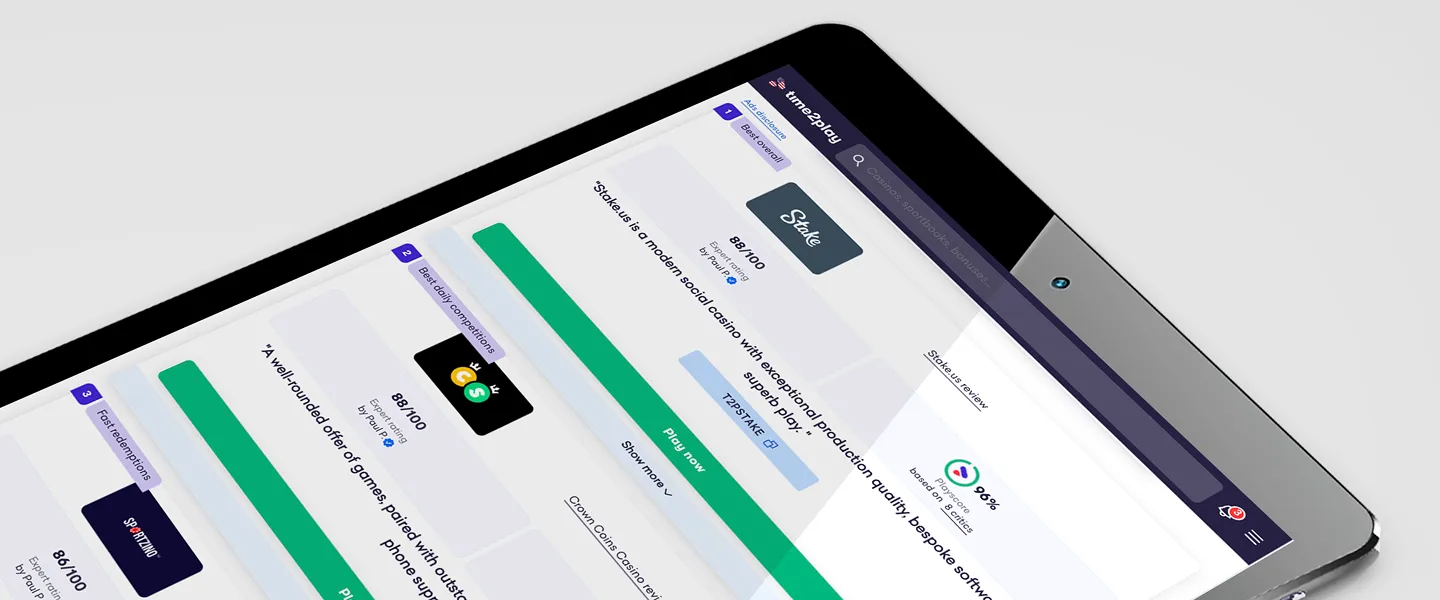
The flagship deliverable. A single configurable block that powers casino and sportsbook rankings across the site, giving editors control over every dimension that used to require engineering:
- Manual or automated selection of which operators appear
- Filtering across seven business-critical criteria (payment methods, affiliate availability and others)
- A swappable rating system – the default “Expert Rating” can be replaced with any other scoring methodology on a per-list basis
- Custom critic assignments shown in operator popups
- Bonus assignments mapped to specific positions and ability to override the bonus
- Default or custom Unique Selling Points per operator
- Custom labels to promote paid positions
- Live data pulled from the central operator database, with the ability to override any value manually
3. Two-stage data migration
- Content was first migrated from the legacy field-based setup into native editor blocks, with manual review on every record to guarantee parity. Operator data was then migrated from the standalone database into the portfolio-wide operator database – a high-complexity step requiring custom transformation logic for fields that didn’t map one-to-one.
4. Custom-built search experience
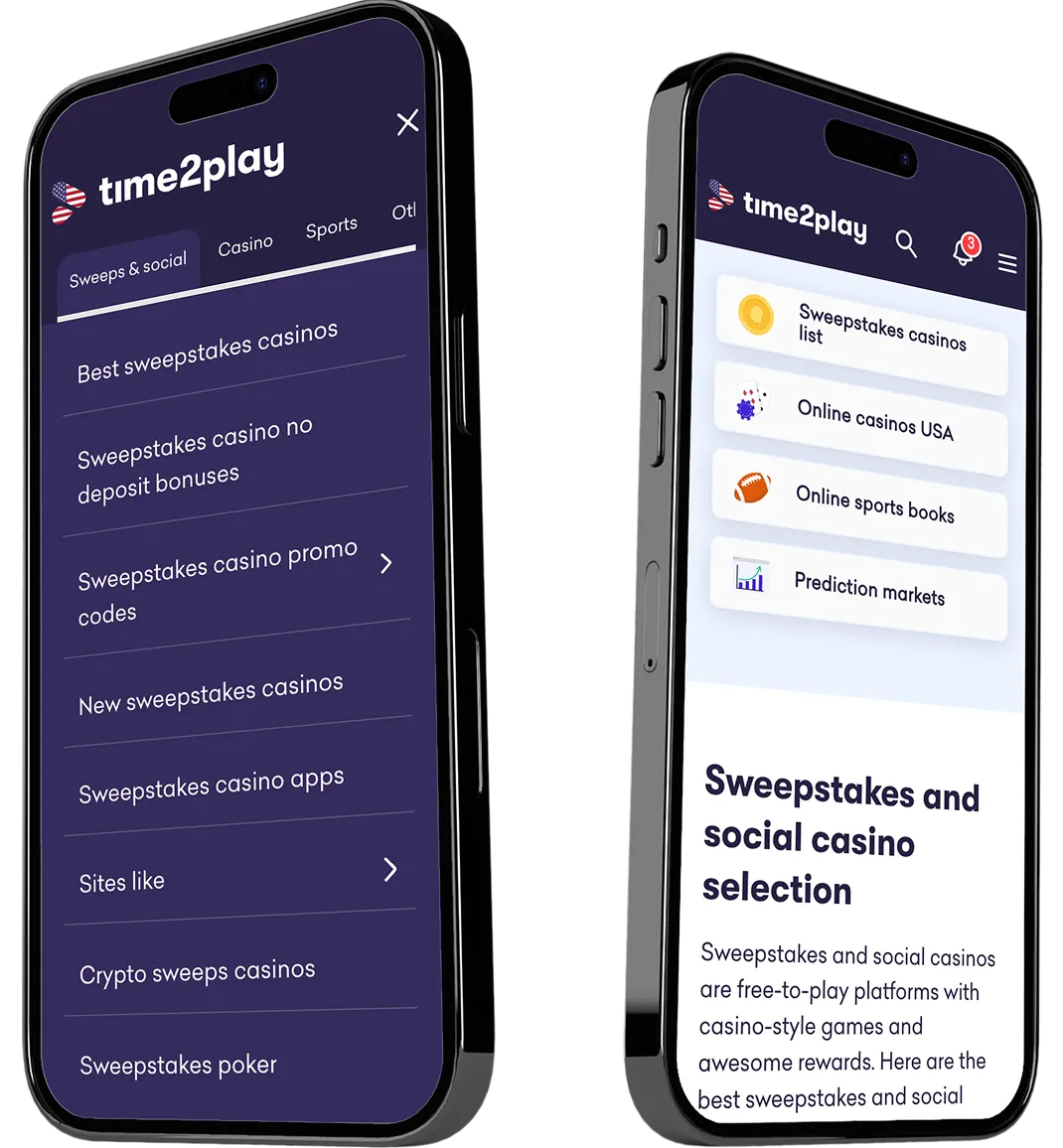
- The site’s search was rebuilt as a fully branded interface, powered by the underlying search plugin’s API only. The default plugin UI was discarded – what users see is a search experience designed specifically for the Time2Play audience.
5. Engineering discipline as a service
- Embedded delivery model with formal code review on every change, alignment with the client’s existing framework standards, and QA coverage matched to a high-traffic affiliate environment.

Let’s talk about how we can apply similar solutions to your project.
EFFECTS
Results (Before → After)
Editors compose and update pages directly in a block editor that matches the live design
Layout changes required a developer ticket
Synced with the portfolio-wide operator database – one source of truth across the network
Stored locally, isolated from other brands
Configurable block with seven filters, swappable rating systems, manual overrides per position, and live data from the central database
Static, hard-coded, dev-dependent
Custom-built, brand-aligned search powered by the plugin’s API
Default plugin interface
Driven by editorial calendar
Constrained by engineering availability
Integrated with the wider portfolio infrastructure
Standalone implementation
Why it worked
- Embedded delivery model – our team worked inside the client’s sprint cadence, their codebase, their standards and our expertise
- iGaming-native engineering experience – built on years of work with affiliate and gambling-sector clients across multiple markets
- Migration treated as a process, not a script – manual review on every record, zero data loss, zero SEO regression
- Formal code review from day one – quality gate that didn’t bend to deadline pressure